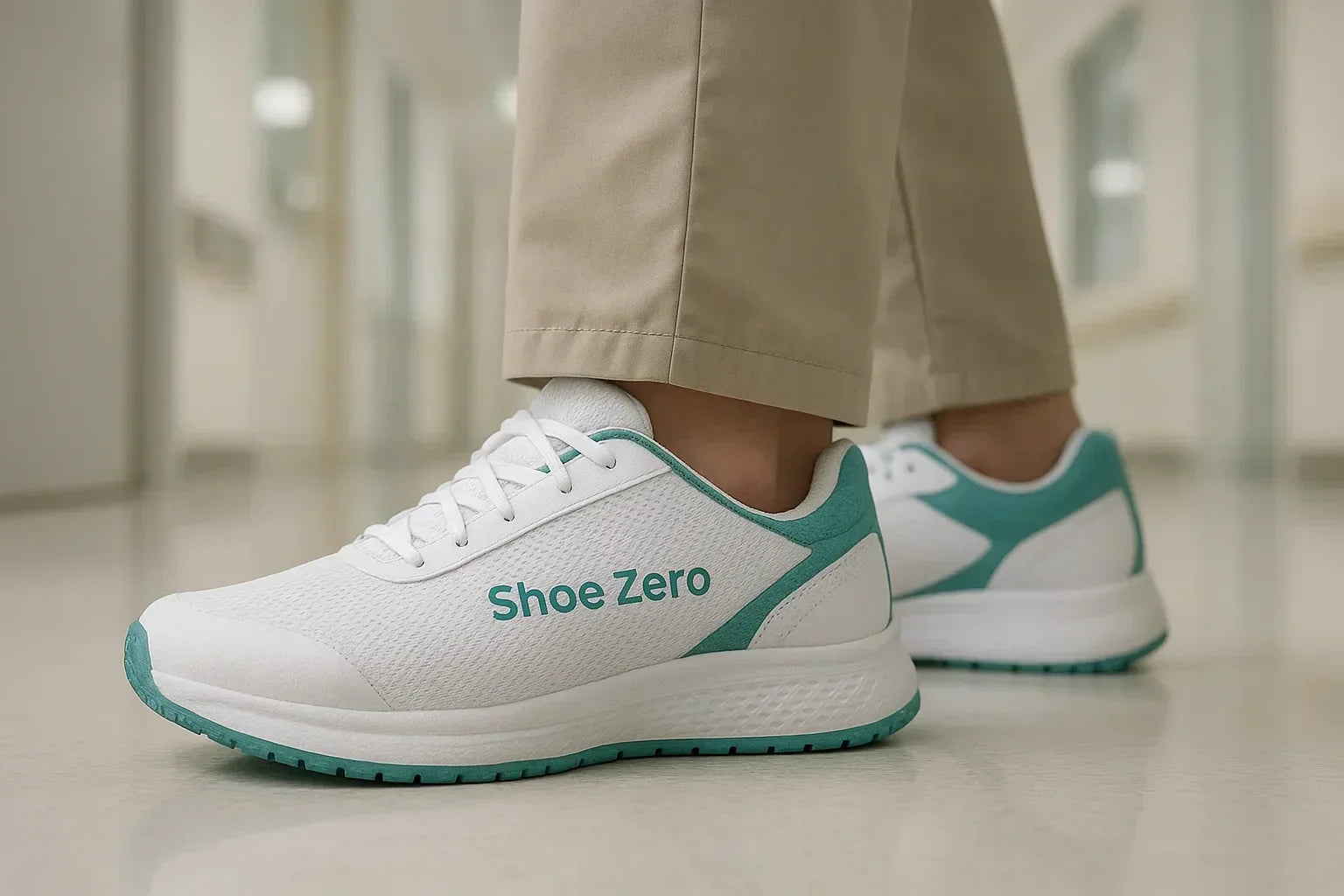
Hospitals and clinics are fast-paced environments where staff spend long hours on their feet, often in slippery or hazardous conditions. Custom shoes for hospitals and healthcare teams are emerging as a smart solution to improve comfort, safety, and team unity. In this post, we outline why custom footwear matters for healthcare professionals, what features to look for, and how customized shoes can benefit both staff and the organization.
Benefits of Custom Shoes for Healthcare Workers
Healthcare workers face unique challenges that make proper footwear essential. Custom-designed shoes address these needs in ways generic shoes often can’t.
All-Day Comfort for Long Shifts
Nurses, doctors, and support staff frequently work 8-12 hour shifts and walk thousands of steps per day. Studies show that most nurses take at least 9,000 steps per shift, leading to common foot problems like pain, corns, and calluses. Shoes with adequate cushioning and arch support help prevent foot and back pain, improving comfort over long shifts. In fact, podiatrists recommend athletic-style shoes for healthcare workers because running shoes provide the lightweight build and shock absorption needed for these lengthy workdays. By investing in custom shoes tailored to support prolonged standing and walking, hospitals can reduce staff fatigue and risk of chronic foot issues.
Slip-Resistant Soles for Safety
Slippery floors from spills or floor polish make hospitals prone to accidents. Slip and fall injuries are a serious concern in healthcare facilities, accounting for a significant portion of staff injuries. Custom hospital shoes typically feature slip-resistant outsoles with specialized rubber tread to grip wet or slick floors. This can dramatically improve safety – for example, one hospital safety footwear program saw up to an 80% reduction in slip-and-fall accidents after equipping employees with high-traction, slip-resistant shoes. By preventing injuries, slip-resistant custom shoes protect staff well-being and spare the organization costly workers’ compensation claims or lost work time. Safety-focused footwear (including options like safety-toe or puncture-resistant shoes for certain roles) shows that the hospital prioritizes employee health and injury prevention.
Hygiene and Easy-Clean Materials
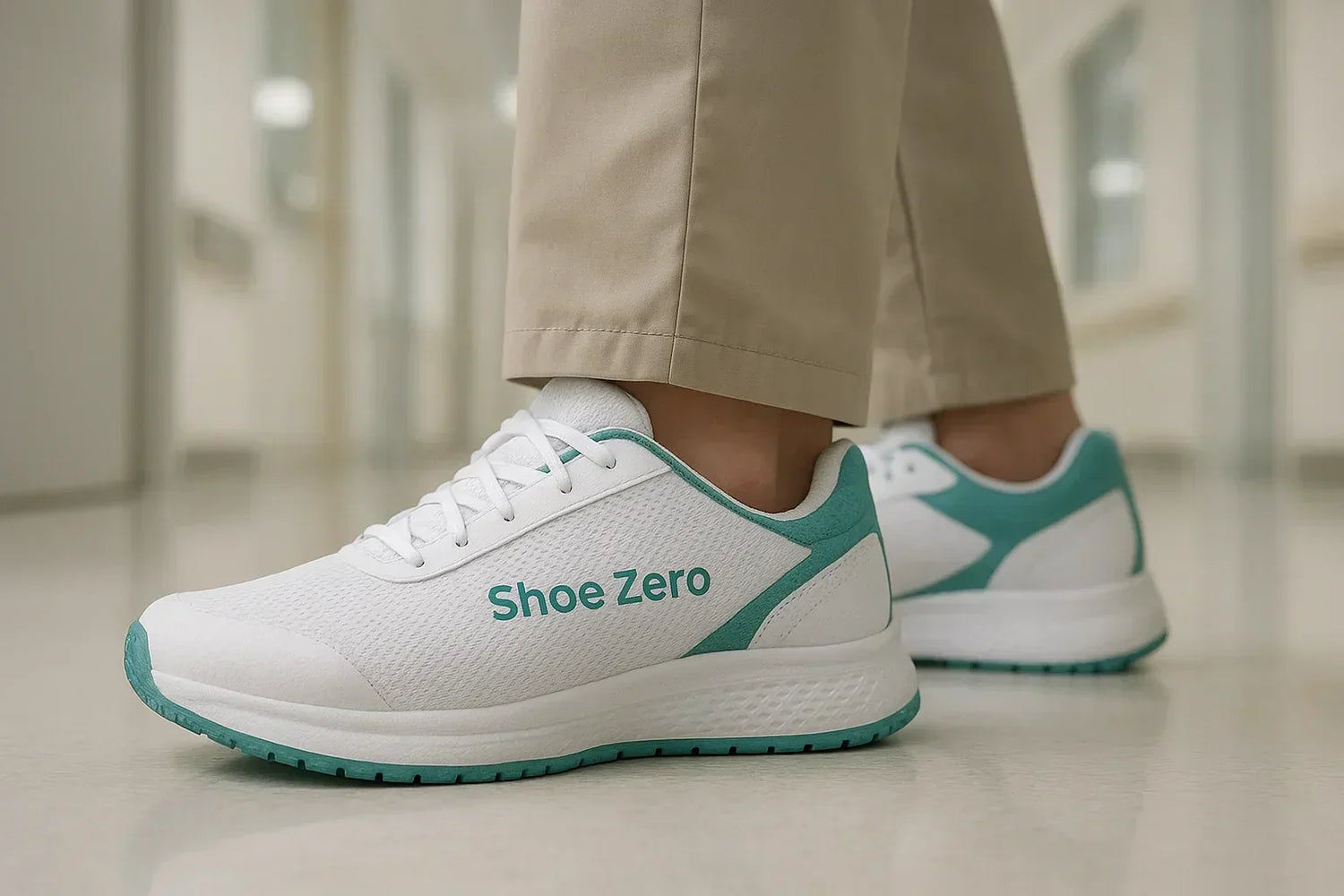
Hospitals can be messy, and shoes often come into contact with blood, fluids, or harsh cleaning agents. Custom healthcare shoes address this with fluid-resistant, easy-to-clean materials. For instance, Nike’s Zoom Pulse medical shoe was designed with a coated upper that’s water-resistant and easy to wipe down. Many custom nurse shoes are made of synthetic materials that repel liquids and can be quickly sanitized, rather than absorbent fabrics. This not only prolongs the life of the shoe but also helps maintain hospital hygiene standards. A shoe that doesn’t trap spills or germs is safer for both the worker and patients. When shoes are simple to clean (e.g. smooth surfaces, minimal laces), staff can keep them looking professional and germ-free with minimal effort.
Team Cohesion and Professional Image
Beyond comfort and safety, custom shoes can foster a sense of team identity and professionalism among healthcare staff. By customizing footwear with hospital colors, logos, or department-specific designs, teams present a unified look that reinforces branding and morale. According to a recent program by Zappos at Work, providing staff with personalized footwear (fitted to safety needs and uniform color schemes) reinforces team identity and makes employees feel valued. Matching custom shoes as part of the uniform can make nurses and doctors easily identifiable and show that the organization cares about the details of employee attire.
Customization can also play a role in staff recognition and retention. Some hospitals gift custom shoes to employees as rewards for milestones or exemplary performance. This not only provides a practical benefit but also creates a shared experience and appreciation. Zappos found that gifting shoes to healthcare employees helped with staff recognition programs, boosting morale and even aiding retention of frontline workers. In short, having a comfortable, personalized pair of shoes can mean the difference between a good day and a bad day for a nurse, and it subtly boosts workplace pride.
Key Features to Consider in Custom Healthcare Shoes
Not all shoes are created equal. When choosing or designing custom shoes for hospital staff, it’s crucial to focus on features that enhance comfort, safety, and durability in a healthcare setting. Below are the top features to look for:
Supportive Cushioning and Arch Support
Long shifts require shoes that can support the foot’s structure and reduce strain. Look for designs with ergonomic insoles, ample cushioning, and arch support. A quality nursing shoe should cradle the heel and support the arch without being too tight in the toebox. Proper support helps prevent issues like plantar fasciitis and tired, aching feet. Some custom shoe programs even offer custom-formulated insoles or the ability to use orthotic inserts for those with special requirements. The goal is to distribute pressure evenly and maintain comfort for eight hours and beyond. When evaluating options, press on the insole – a supportive insole shouldn’t collapse easily under pressure. Ensure the shoes also come in the correct width and size for each staff member so that support features align correctly with the foot.
Non-Slip Traction
Slip-resistant soles are a non-negotiable feature for hospital footwear. Examine the outsole material and tread pattern: rubber compounds with deep grooves and channels tend to provide better grip on wet or oily floors. Many custom work shoes are tested to meet or exceed slip resistance standards (for example, ASTM or OSHA guidelines for slip-resistant footwear in workplaces). Good traction not only prevents falls but also lets staff move quickly and confidently during emergencies. Some hospitals implement managed shoe programs where only certified slip-resistant shoes are allowed, given that slips, trips, and falls are the second most common cause of lost-workday injuries in hospitals. When customizing shoes, ensure the provider offers a high-traction outsole option. Even stylish custom sneakers for healthcare should not sacrifice safety – ideally, they’ll be both “fluid- and slip-resistant, easy to clean, comfortable, and of course, stylish”.
Durable, Easy-Clean Materials
Hospital shoes see heavy use, so durability is key. Materials should be high-quality and built to last through constant walking and frequent cleaning. Full-grain leather or coated synthetics are popular for their durability and spill-resistant properties. For example, some nurse shoes use a polyurethane-coated upper that resists stains and water. Seamless designs or protected seams can prevent liquids from seeping in and make wiping down the shoes more effective. Also consider breathability: while the material should be fluid-proof, some designs include breathable linings or vents in non-critical areas to avoid sweaty feet. Since hospital staff often sanitize their shoes or use harsh chemicals for cleaning, the materials and any custom prints (like logos) should be able to withstand regular cleaning without fading or cracking. A well-constructed custom shoe will maintain its structure for months; in fact, experts recommend replacing daily work shoes about every 6 to 12 months due to wear, so the shoes should hold up at least that long under tough conditions. Sturdy yet lightweight construction (for example, reinforced toe areas for those who operate foot pedals, or extra stitching in high-stress areas) is ideal.
Proper Fit and Sizing Options
One often overlooked aspect is ensuring a proper fit for each staff member. Ill-fitting shoes can cause blisters, toe deformities (like bunions or hammer toes), and general discomfort. When ordering custom shoes for a team, work with a provider that offers a wide range of sizes for both men and women, including half sizes and various widths. Some custom shoe programs will allow employees to individually select their size and even the style that suits them best on a branded ordering portal. A proper fit means the heel is comfortably snug (no slipping while walking) and toes have room to wiggle. If possible, have staff measure their feet or try sizing samples. Orthotic compatibility is another plus – shoes that have removable insoles can accommodate custom orthotics or inserts for those who need extra support. By prioritizing fit in your custom shoe initiative, you ensure every team member gets the full benefit of the footwear’s comfort and support features.
Additional Safety Features (Optional)
Depending on the role, some healthcare staff might need specialized safety features. For instance, maintenance workers, lab technicians, or EMTs in a hospital setting may require protective toe caps (composite or steel toe) or puncture-resistant soles as part of their footwear. If your healthcare facility has these needs, look for custom shoe options that include safety-toe variants or electrical hazard protection in the design. Custom safety shoes are available that integrate corporate logos or colors while still providing features like toe protection and slip resistance. Ensure that any added safety features meet the relevant safety standards. While not every healthcare team will need this, it’s good to know that customization isn’t limited to aesthetics – it can also include functional protections tailored to specific job hazards.
Customization and Style Options for Hospital Teams
One of the advantages of custom shoes is the ability to tailor not just the fit and function, but also the appearance of the footwear. This can help align with hospital branding or personal preferences while still meeting dress code requirements.
Personalized Branding (Logos and Colors)
Hospitals often have specific colors or emblems associated with their brand or departments. Custom shoes can be produced in colors that match the hospital’s uniform or logo palette, creating a cohesive look from head to toe. For example, a children’s hospital might opt for shoes with bright, friendly colors, whereas a general hospital might choose more neutral tones that match their scrubs. Many custom shoe suppliers offer logo placement options as well – such as printing or embroidering the hospital’s logo, team name, or even the staff member’s name on the shoe. This level of branding turns a pair of shoes into part of the official uniform. It reinforces professionalism and can even make staff more recognizable to patients (imagine patients spotting the hospital logo on a nurse’s shoes as part of the uniform). Zappos at Work, for instance, creates custom-branded online catalogs for hospitals, ensuring that any footwear staff choose meets the required color scheme and has the facility’s branding where appropriate. When planning custom designs, it’s wise to involve the marketing or branding team of the hospital to maintain consistency with other apparel (like scrubs or lab coats).
Coordinating Styles for Different Roles
Within a healthcare team, not everyone may want the same style of shoe, yet you can still maintain a uniform look by offering a curated selection. A good custom program will provide a range of styles that meet the technical criteria (comfort and safety) but let individuals choose what suits them best. Common styles for healthcare include athletic sneakers, slip-on clogs, and even ankle boots. For example, nurses on a general floor might prefer athletic sneaker-style custom shoes, while an OR surgeon might need washable clogs, and a maintenance worker might require a sturdier boot. It’s possible to customize each of these styles in a matching color or with the same logo so they still appear uniform. Having options is important because some people may need a different type of shoe for orthopedic reasons – one nurse might need extra ankle support (choosing a high-top style or boot), while another prefers a lighter low-top sneaker. When organizing a custom shoe order, gather input on what styles are most comfortable or popular among your staff. Offering two or three approved styles (e.g. a lace-up athletic shoe, a slip-on shoe, and a clog) all customized with the hospital’s branding can cover most preferences. This way, employees feel they have a choice and get footwear that suits their needs, while the hospital ensures everyone is wearing safe, appropriate shoes.
Complementary Custom Gear (Socks and Accessories)
To further enhance comfort and branding, some hospitals also invest in custom accessories alongside shoes. Quality socks are the best friend of a good shoe – consider providing branded compression socks or cushioned socks that can be given with the shoes to improve comfort and circulation during long shifts. These could feature the hospital colors or motto, adding a bit of fun and pride to what is normally a plain item. Other custom merch that pairs with footwear might include things like personalized scrub caps or branded shoe bags for carrying shoes to and from work. While not footwear, these items contribute to a coherent, professional look and can boost team spirit. Since footwear programs like the ones mentioned often come as part of a broader uniform initiative, think about the entire ensemble: from head to toe the team can present a unified image. A comprehensive approach might mean the hospital’s custom branding appears on scrubs, custom boots for specific units (like EMT teams), or even custom sandals for off-duty leisurewear that staff can wear outside work as proud ambassadors of their workplace. The key is ensuring any custom merch or apparel maintains the balance of comfort, safety, and professionalism that healthcare demands.
Beyond Healthcare: Custom Shoes and Merch for Every Need
While our focus is on healthcare teams, it’s worth noting that custom shoes are beneficial in many other fields as well. Customization allows footwear to be tailored to the exact needs and identity of any group or activity. For example, sports teams often design custom basketball shoes to boost performance and team spirit on the court. Fashion-forward customers create unique looks with custom low tops and custom high tops that express personal style or brand identity. Workers in tough environments might require custom boots with specialized protection, whereas someone planning a summer event might opt for custom sandals for a branded yet casual look. There are even custom kids’ shoes available for school teams or youth groups, ensuring even the little ones can match their squad or cause. Beyond shoes, many organizations produce custom merchandise like apparel and accessories (think matching t-shirts, hats, or bags) to complement their footwear and reinforce their brand. The world of custom footwear and merchandise is broad – and in every case, the goal is the same: to provide something uniquely suited to the wearers’ needs and identity. In short, whether it’s a nurse on a hospital floor or an athlete on a team, custom shoes offer a combination of function, comfort, and personalization that standard shoes simply can’t match.
Frequently Asked Questions
1.What are the benefits of custom shoes for healthcare workers?
Custom shoes offer tailored comfort and safety features that generic shoes might lack. For healthcare workers, this means better arch support and cushioning for long shifts, slip-resistant soles to prevent falls, and durable, fluid-proof materials for hygiene. Custom shoes can also be branded with hospital colors or logos, fostering a unified professional look and boosting staff morale. Essentially, they address the specific needs of healthcare professionals, from reducing foot fatigue to enhancing team spirit, in ways regular retail shoes cannot.
2.How do I choose the right custom shoe for my hospital staff?
Start by identifying the key needs of your staff. Do they mostly complain of sore feet or slipping accidents? Look for shoes that target those issues (e.g. ones with dual-density cushioning for comfort during 12-hour shifts or certified slip-resistant outsoles). Involve a sample of employees to gather preferences on styles, some may prefer athletic sneakers, others may need slip-ons.
3.Can we add our hospital’s logo or colors to custom shoes?
Yes, you can typically specify colors to match your hospital’s branding or department color codes, and add elements like a logo, hospital name, or even individual names. The logo might be printed on the shoe’s side, tongue, or heel, depending on the design.
4.Are custom hospital shoes more expensive than regular shoes?
The cost of custom shoes can vary, but they are often comparable to high-quality work or athletic shoes. You might pay a bit more for customization (printing logos, special colors, or unique sizing), but consider the long-term value. Quality custom shoes tend to be very durable and designed for heavy use, so they may last longer than cheap off-the-shelf shoes. More importantly, they can save money by preventing injuries, for example, reducing slip accidents (and related medical or legal costs) by a significant margin with proper slip-resistant footwear.
5.How often should healthcare workers replace their work shoes?
Even the best shoes won’t last forever. A general rule of thumb is to replace work shoes roughly every 6 to 12 months, depending on usage. Nurses and doctors who walk many miles each shift will wear out cushioning and tread faster.
6.Where can we get custom shoes for our healthcare team?
There are several routes you can take. Many uniform supply companies offer customizable shoes as part of their catalog. You could also work directly with specialty footwear brands that cater to professionals – some, like Snibbs or Clove, focus on stylish healthcare shoes and might offer group sales or customization.